
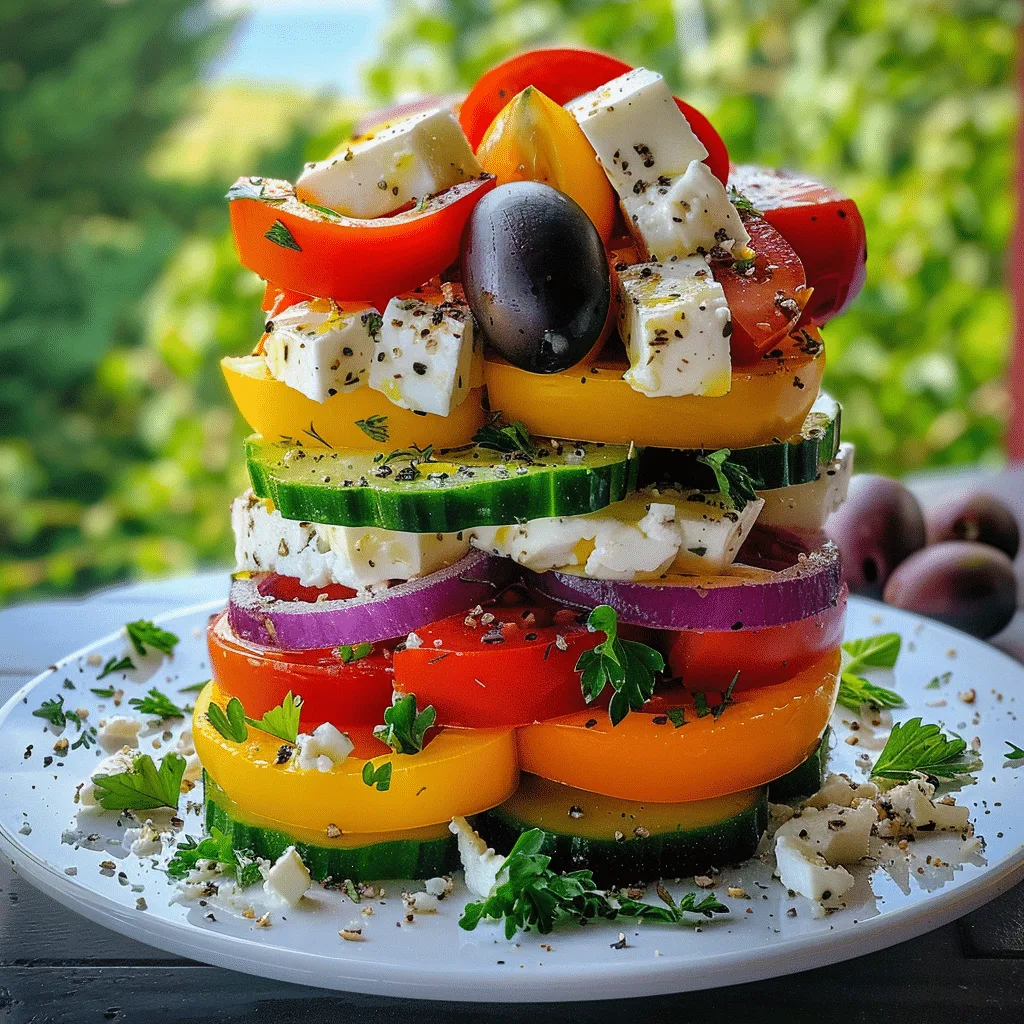
When I first discovered the idea of a layered Greek salad “stack” I was intrigued. You take the same crisp vegetables, tangy olives, and creamy cheese from a classic Greek Salad, but present them in a vertical, elegant fashion that instantly feels elevated. I tried this version using heirloom tomatoes for added colour and flavour, and it made a weeknight salad feel like a special-occasion dish. The beauty of this recipe is that the stacking enhances the textures — the juicy tomato, the crunchy cucumber, the soft feta — and when you spoon over a drizzle of olive oil and herbs, each bite becomes a mini, flavour-packed mouthful. Whether you’re entertaining or simply want to turn a simple salad into something memorable, this is your go-to.
Why You’ll Love This Recipe
This Greek Salad Stack delivers on both form and flavour. The layers give visual impact, and the combination of fresh vegetables, briny olives, and rich feta creates the unmistakable Mediterranean taste you crave. It’s quick to assemble yet looks refined, making it ideal for casual meals or adding polish to a dinner gathering. Because everything is fresh, it’s naturally bright and healthy but with enough substance to satisfy. Also, the stacking technique means you can prep the components ahead of time and just build when you’re ready to serve.
Print
Greek Salad Stack — A Layered Mediterranean Delight
- Total Time: 15 mins
- Yield: 4 servings
- Diet: Vegetarian
Description
A beautifully presented Greek-style salad built in layers (stacked) for a striking side or starter dish — crisp veggies, briny olives, feta and olive oil come together in a modern twist on the classic.
Ingredients
- 2 large ripe tomatoes, thickly sliced
- 1 large cucumber, sliced into rounds
- ½ red onion, thinly sliced into rings
- 1 green (or red) bell pepper, cut into rings or strips
- ½ cup pitted Kalamata olives (whole or halved)
- 200 g block feta cheese, cut into thick pieces or triangles
- 3 Tbsp extra-virgin olive oil
- 1 Tbsp red wine vinegar (optional)
- 1 tsp dried Greek oregano
- Salt & freshly ground black pepper, to taste
- Fresh parsley or dill, chopped (for garnish)
Instructions
- Arrange a tomato slice on each serving plate as the base.
- Top each tomato with a cucumber slice.
- Add a ring or slice of red onion on top of the cucumber.
- Place a piece of bell pepper over the onion.
- Add a triangle or piece of feta cheese on top.
- Scatter a few Kalamata olives around or on top.
- Drizzle with extra-virgin olive oil (and vinegar if using).
- Sprinkle dried oregano, salt & pepper.
- Garnish with fresh parsley or dill and serve immediately.
Notes
- Use the freshest, ripest tomatoes you can find for the best flavour.
- For a more elegant look, cut the vegetables uniformly and use a round mold to stack neatly.
- If you prefer, omit the vinegar to stay closer to a more traditional Greek style (just olive oil + salt) as some sources recommend. :contentReference[oaicite:0]{index=0}
- This stack works wonderfully as a starter or side dish; serve with crusty bread to enjoy the olive-oil-rich juices.
- Prep Time: 15 mins
- Cook Time: 0 mins
- Category: Salad / Side Dish
- Method: Layering / Stacking
- Cuisine: Greek / Mediterranean
Ingredients
(Tip: You can find the complete list of ingredients and their measurements in the recipe card below.)
Tomatoes
Ripe, firm tomatoes provide the juicy base layer of the stack. Choose tomatoes that hold their shape when sliced — their natural sweetness gives the salad its backbone.
Cucumber
Cool, crisp cucumber adds contrast to the tomatoes. I prefer slicing them thick enough to see the green outer skin but thin enough to stack neatly. It adds crunch and freshness.
Red onion
Thinly sliced red onion delivers a gentle sharpness that lifts the flavour profile. The contrast of the red-purple colour also adds visual appeal in the stack.
Red or orange pepper (optional but recommended)
For added colour and sweetness, thin strips of bell pepper are a welcome addition. They bring a slightly different texture and brighten the plate.
Kalamata olives (or your preferred Greek-style olives)
Briny, rich olives are essential — they provide that classic Greek salad punch. Pitted ones make layering simpler and cleaner.
Feta cheese (block form or large chunks)
Choose a block of feta rather than crumbled if you want a refined stack. A thick slice of feta can sit between the layers and become a focal point in the presentation.
Extra virgin olive oil
High-quality olive oil is essential. A good oil brings texture, mouthfeel, and the rich Mediterranean flavour that binds the ingredients together.
Dried oregano (or fresh herbs like parsley or dill)
Greek salad flavour often hinges on oregano’s earthy note. I like to finish the stack with a sprinkle of dried oregano and a few fresh parsley leaves for brightness.
Sea-salt and freshly ground black pepper
Simple seasoning lets the fresh produce shine. Salt brings out the tomato juices; pepper adds subtle warmth.
Directions
- Begin by preparing all your vegetables: slice the tomatoes into thick rounds, cut the cucumber into matching thick slices, thinly slice the red onion, and if using bell pepper, cut into thin strips.
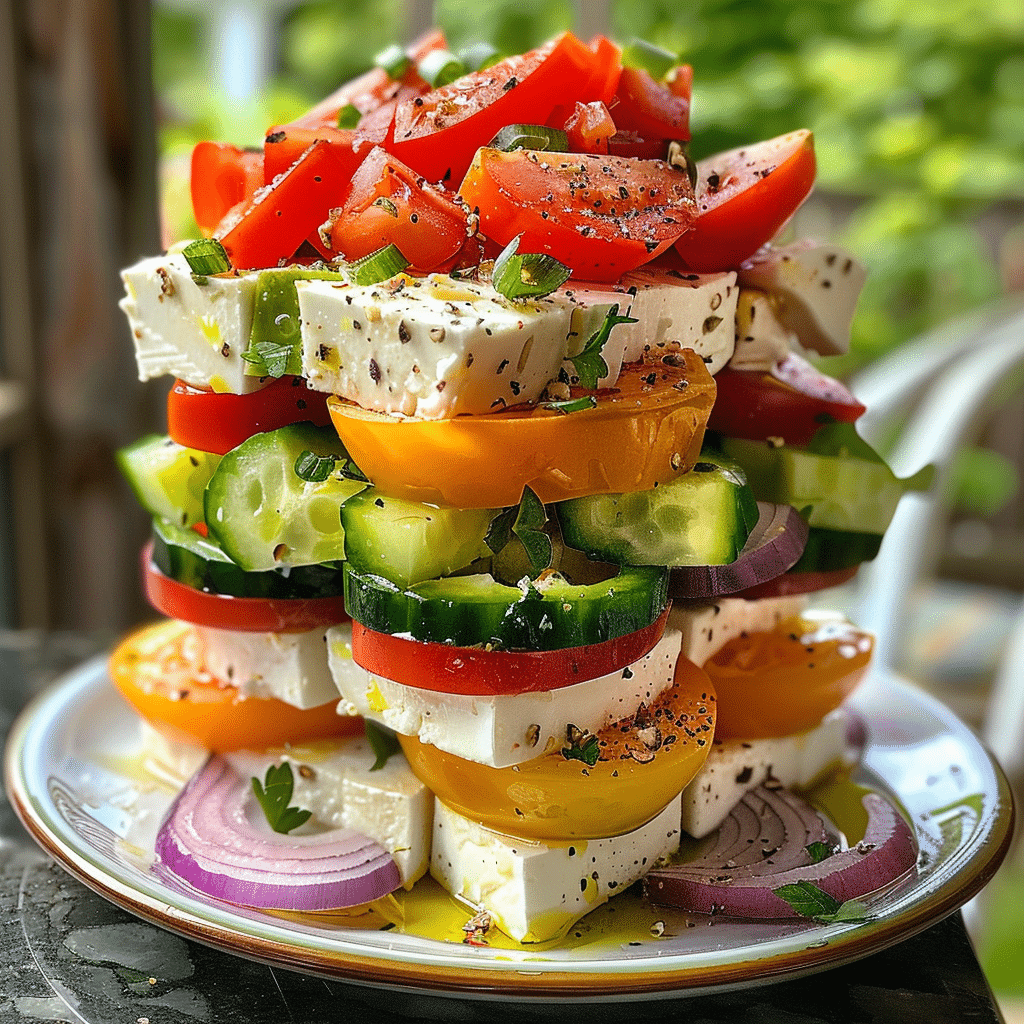
- On each serving plate, build the stack: start with a cucumber slice at the base, then a tomato slice, then red onion, then a slice of bell pepper (if using). Next add a slice or chunk of feta cheese, and top with a Kalamata olive or two. Repeat layering if you like taller stacks.
- Once the stacks are assembled, drizzle each with extra virgin olive oil. Sprinkle with sea salt, freshly ground black pepper, and dried oregano. If you have fresh herbs, scatter a few leaves of parsley or dill around the plate.
- Serve immediately while the vegetables are fresh and crisp. If you like, you can let the stacks rest for 5–10 minutes so the juices begin to meld, but I prefer them right away for maximum texture contrast.
Equipment needed :
Must-Have Tools to Get Rolling
Here’s what you’ll want to have on hand:
Silicone Spatula – Durable, heat-resistant silicone spatula perfect for mixing, scraping, and spreading. Gentle on non-stick cookware and easy to clean.
Large pot – You’ll need this to boil the whole cabbage head and soften the leaves.
large bowl –Spacious, durable large bowl ideal for mixing, serving, or food preparation. Made from sturdy material and easy to clean.
Sharp knife – For coring the cabbage and slicing out the thick stem in each leaf. A paring knife works best.
Mixing bowl – A big bowl makes it easier to combine your meat and rice filling evenly.
Cutting board – For prepping cabbage leaves and rolling them like a pro.
9×13-inch baking dish – Ideal size to fit your rolled cabbage leaves snugly and prevent them from unraveling.
knife – A sharp, durable kitchen knife perfect for slicing, chopping, and dicing with ease
Servings and timing
Servings: 4
Prep time: Approximately 15 minutes
Total time: Approximately 15 minutes
Storage/reheating
This salad is best eaten fresh — the crisp vegetables and clean flavours shine immediately. If you must store leftovers, cover the stacks loosely with plastic wrap and refrigerate for up to 1 day. Note: the vegetables will soften slightly upon storage, and the presentation loses some of its crispness. No reheating required since this is a cold/fresh salad.
Variations and Customizations
Mediterranean Add-On
Add roasted red peppers, artichoke hearts, or sun-dried tomatoes for extra depth and colour.
Protein Boost
Top each stack with a grilled shrimp, a slice of grilled chicken or a piece of seared halloumi to turn it into a light main.
Vegan Version
Replace the feta block with a firm vegan cheese, omit the olive if you like, and keep the high-quality olive oil and herbs for full flavour.
Herb-Loaded Presentation
Instead of just dried oregano, layer fresh mint or basil between slices, and finish with a light lemon-zest sprinkle for brightness.
Skewer Style
If you prefer finger food or an appetizer version, assemble the same ingredients on a small skewer or toothpick—alternate cucumber, tomato, onion ring, feta cube, olive—drizzle oil and oregano on top. Inspired by “stackers” recipes. Cooking on the Front Burner+1
FAQs
1. Can I use cherry tomatoes instead of large tomatoes?
Yes — you can halve cherry tomatoes and stack them accordingly, though you’ll end up with shorter stacks and may adjust the layering.
2. Is lettuce required in a Greek salad stack?
No — traditional Greek salads typically don’t include lettuce. The focus is on vegetables like tomato, cucumber, onion, olives and cheese. Allrecipes+1
3. Can I prepare components ahead of time?
Yes — slice the vegetables and chill them ahead of time. But assemble the stacks just before serving to maintain crispness and visual appeal.
4. What olive oil should I use?
A good-quality extra virgin olive oil with a fruity or peppery finish is ideal. The oil plays a starring role here.
5. Can I make this gluten-free?
Absolutely — all ingredients are naturally gluten-free. Just ensure any added variations (e.g., croutons or skewers) conform accordingly.
6. How tall should the stack be?
There’s no fixed height — you could do two to three layers depending on plate size and presentation style. The goal is visually pleasing and manageable to eat.
7. Can I add more veggies?
Yes — bell pepper, green pepper strips or even thinly sliced zucchini can be layered in. Just keep the flavours balanced so the salad doesn’t become too complex.
8. Is there a dressing besides olive oil?
Traditionally, this type of Greek salad stack is simply drizzled with olive oil and sprinkled with oregano and salt/pepper — no heavy dressing required. Allrecipes+1
9. Can I scale this for a larger crowd?
Certainly — multiply ingredient quantities accordingly and consider making two or more stacks per plate or larger stacks for buffet style.
10. What cheese if I don’t like feta?
You could use goat cheese, ricotta salata, or a mild firm cheese if feta isn’t your preference — just choose one that holds its shape when sliced.
Conclusion
The Greek Salad Stack transforms simple ingredients into a refined, elegant dish. With fresh vegetables, briny olives, rich feta and excellent olive oil, each bite offers the best of Mediterranean flavours in a visually striking presentation. Quick to assemble and satisfying to eat, this recipe is perfect for both relaxed dinners and more formal occasions. Serve it fresh, serve it with style — it’s sure to impress.
Hungry for more? Visit our website for full recipes and follow us on Pinterest for daily foodie inspo you’ll love to pin!